Buy healthmastery.eu ?
We are moving the project
healthmastery.eu .
Are you interested in purchasing the domain
healthmastery.eu ?
domain@kv-gmbh.de · 0541-91531010
Buy healthmastery.eu ?
What is the difference between a power take-off shaft and a drive shaft?
A power take-off (PTO) shaft is a type of drive shaft that transfers power from a vehicle's engine to an attachment or implement, such as a pump or generator. The main difference between a PTO shaft and a regular drive shaft is that a PTO shaft is specifically designed to transfer power to external equipment, while a drive shaft is typically used to transfer power within a vehicle's transmission or between different components of a vehicle. Additionally, PTO shafts are often detachable and can be connected and disconnected as needed, whereas a drive shaft is a permanent component of a vehicle's drivetrain. **
Why are there no simple motorcycles with shaft drive or belt drive?
There are no simple motorcycles with shaft drive or belt drive because these systems are more complex and expensive to manufacture compared to chain drive systems. Chain drives are simpler, lighter, and more cost-effective, making them the preferred choice for most motorcycles. Additionally, chain drives offer easier maintenance and customization options, which are important factors for many motorcycle enthusiasts. Overall, the simplicity and efficiency of chain drives make them the more popular choice in the motorcycle industry. **
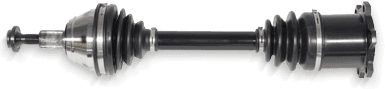
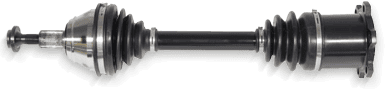
Similar search terms for JAPANPARTS-GI-H52-Drive-shaft
Top-Angebote
Products related to JAPANPARTS-GI-H52-Drive-shaft:
-
JAPANPARTS GI-L09 Drive shaftFitting Position: Front Axle Left; Length [mm]: 629,5; External Toothing wheel side: 28; External Toothing differential side: 25; Seal Ring Diameter [mm]: 56; Hub Length [mm]: 83,5; Braking/Driving Dynamics: for vehicles without ABS; Transmission Code: non per veicoli 4WD193,99 £*Shipping: 1,99 £Secure redirect to the provider
-
JAPANPARTS GI-H17 Drive shaftFitting Position: Front Axle Right; Overall Length [mm]: 670; Length 1 [mm]: 95; Seal Ring Diameter [mm]: 62; External Toothing wheel side: 30; Internal Gearing Differential Side (transmission connection): 26; Number of Teeth, ABS ring: 52; Construction Year to: 05/200899,49 £*Shipping: 8,45 £Secure redirect to the provider
-
JAPANPARTS GI-H50 Drive shaftFitting Position: Front Axle Right; Transmission Type: 6-Speed Manual Transmission, automatically operated; External Toothing differential side: 27; External Toothing wheel side: 25; Seal Ring Diameter [mm]: 53; Overall Length [mm]: 926; Thread Size: M22x1,5187,99 £*Shipping: 1,99 £Secure redirect to the provider


-
How to calculate the moment of inertia of the drive shaft?
To calculate the moment of inertia of the drive shaft, you need to know the mass of the shaft and its distribution along its length. The moment of inertia can be calculated using the formula I = ∫r^2 dm, where r is the distance from the axis of rotation to the element of mass dm. By integrating this formula over the entire length of the shaft, you can determine the moment of inertia of the drive shaft. Alternatively, you can also use the parallel axis theorem to calculate the moment of inertia if the shaft is not rotating about its center of mass. **
-
How do you clean a well shaft?
To clean a well shaft, you can start by removing any debris or sediment that may have accumulated at the bottom of the well using a bucket or a pump. Next, you can scrub the walls of the well shaft using a brush or a pressure washer to remove any algae, mineral deposits, or other build-up. It is important to flush the well with clean water to remove any loosened debris and ensure the water is clear and safe for use. Regular maintenance and cleaning of the well shaft can help prevent clogs and contamination of the water supply. **
-
How do you calculate the moment of inertia of the drive shaft?
The moment of inertia of a drive shaft can be calculated using the formula for the moment of inertia of a solid cylinder, which is \( I = \frac{1}{2} m r^2 \), where \( m \) is the mass of the shaft and \( r \) is the radius of the shaft. If the drive shaft is not a solid cylinder, the moment of inertia can be calculated by summing the moments of inertia of its individual components using the parallel axis theorem. This involves calculating the moment of inertia of each component about its own center of mass and then adding the mass of each component multiplied by the square of the distance between its center of mass and the axis of rotation. **
-
How can one find a well shaft underground?
One way to find a well shaft underground is to use ground-penetrating radar (GPR) technology, which can detect changes in the subsurface that may indicate the presence of a well. Another method is to use a metal detector to locate any metal components of the well, such as the casing or pump. Additionally, consulting historical records or local experts may provide information on the location of existing wells in the area. It is important to note that finding a well shaft underground can be a complex and potentially dangerous task, so it is advisable to seek professional assistance when attempting to locate a well. **


What are meditation and mindfulness?
Meditation is a practice that involves focusing the mind on a particular object, thought, or activity to train attention and awareness, and achieve a mentally clear and emotionally calm state. Mindfulness is a type of meditation that involves paying attention to the present moment without judgment. It involves being fully aware of your thoughts, feelings, bodily sensations, and surrounding environment. Both meditation and mindfulness have been shown to have numerous benefits for mental and physical well-being, including reducing stress, improving focus, and enhancing overall quality of life. **
What about the shaft?
The shaft is a long, narrow part of a structure or object that typically provides support or serves as a passageway. In the context of machinery or equipment, the shaft is often used to transmit power or motion from one part to another. It is important to ensure that the shaft is properly aligned, lubricated, and maintained to prevent wear and damage, which can lead to equipment failure. **
Top-Angebote
Products related to JAPANPARTS-GI-H52-Drive-shaft:
-
JAPANPARTS GI-H52 Drive shaftFitting Position: Front Axle Right; Seal Ring Diameter [mm]: 60; External Toothing differential side: 28; External Toothing wheel side: 27; Thread Size: M22x1,5; Overall Length [mm]: 600; Transmission Type: for 7-speed dual-clutch transmission130,99 £*Shipping: 8,45 £Secure redirect to the provider
-
JAPANPARTS GI-L09 Drive shaftFitting Position: Front Axle Left; Length [mm]: 629,5; External Toothing wheel side: 28; External Toothing differential side: 25; Seal Ring Diameter [mm]: 56; Hub Length [mm]: 83,5; Braking/Driving Dynamics: for vehicles without ABS; Transmission Code: non per veicoli 4WD193,99 £*Shipping: 1,99 £Secure redirect to the provider
-
What is the difference between a power take-off shaft and a drive shaft?
A power take-off (PTO) shaft is a type of drive shaft that transfers power from a vehicle's engine to an attachment or implement, such as a pump or generator. The main difference between a PTO shaft and a regular drive shaft is that a PTO shaft is specifically designed to transfer power to external equipment, while a drive shaft is typically used to transfer power within a vehicle's transmission or between different components of a vehicle. Additionally, PTO shafts are often detachable and can be connected and disconnected as needed, whereas a drive shaft is a permanent component of a vehicle's drivetrain. **
-
Why are there no simple motorcycles with shaft drive or belt drive?
There are no simple motorcycles with shaft drive or belt drive because these systems are more complex and expensive to manufacture compared to chain drive systems. Chain drives are simpler, lighter, and more cost-effective, making them the preferred choice for most motorcycles. Additionally, chain drives offer easier maintenance and customization options, which are important factors for many motorcycle enthusiasts. Overall, the simplicity and efficiency of chain drives make them the more popular choice in the motorcycle industry. **
-
How to calculate the moment of inertia of the drive shaft?
To calculate the moment of inertia of the drive shaft, you need to know the mass of the shaft and its distribution along its length. The moment of inertia can be calculated using the formula I = ∫r^2 dm, where r is the distance from the axis of rotation to the element of mass dm. By integrating this formula over the entire length of the shaft, you can determine the moment of inertia of the drive shaft. Alternatively, you can also use the parallel axis theorem to calculate the moment of inertia if the shaft is not rotating about its center of mass. **
-
How do you clean a well shaft?
To clean a well shaft, you can start by removing any debris or sediment that may have accumulated at the bottom of the well using a bucket or a pump. Next, you can scrub the walls of the well shaft using a brush or a pressure washer to remove any algae, mineral deposits, or other build-up. It is important to flush the well with clean water to remove any loosened debris and ensure the water is clear and safe for use. Regular maintenance and cleaning of the well shaft can help prevent clogs and contamination of the water supply. **
Similar search terms for JAPANPARTS-GI-H52-Drive-shaft
-
JAPANPARTS GI-H17 Drive shaftFitting Position: Front Axle Right; Overall Length [mm]: 670; Length 1 [mm]: 95; Seal Ring Diameter [mm]: 62; External Toothing wheel side: 30; Internal Gearing Differential Side (transmission connection): 26; Number of Teeth, ABS ring: 52; Construction Year to: 05/200899,49 £*Shipping: 8,45 £Secure redirect to the provider
-
JAPANPARTS GI-H50 Drive shaftFitting Position: Front Axle Right; Transmission Type: 6-Speed Manual Transmission, automatically operated; External Toothing differential side: 27; External Toothing wheel side: 25; Seal Ring Diameter [mm]: 53; Overall Length [mm]: 926; Thread Size: M22x1,5187,99 £*Shipping: 1,99 £Secure redirect to the provider
-
How do you calculate the moment of inertia of the drive shaft?
The moment of inertia of a drive shaft can be calculated using the formula for the moment of inertia of a solid cylinder, which is \( I = \frac{1}{2} m r^2 \), where \( m \) is the mass of the shaft and \( r \) is the radius of the shaft. If the drive shaft is not a solid cylinder, the moment of inertia can be calculated by summing the moments of inertia of its individual components using the parallel axis theorem. This involves calculating the moment of inertia of each component about its own center of mass and then adding the mass of each component multiplied by the square of the distance between its center of mass and the axis of rotation. **
-
How can one find a well shaft underground?
One way to find a well shaft underground is to use ground-penetrating radar (GPR) technology, which can detect changes in the subsurface that may indicate the presence of a well. Another method is to use a metal detector to locate any metal components of the well, such as the casing or pump. Additionally, consulting historical records or local experts may provide information on the location of existing wells in the area. It is important to note that finding a well shaft underground can be a complex and potentially dangerous task, so it is advisable to seek professional assistance when attempting to locate a well. **
-
What are meditation and mindfulness?
Meditation is a practice that involves focusing the mind on a particular object, thought, or activity to train attention and awareness, and achieve a mentally clear and emotionally calm state. Mindfulness is a type of meditation that involves paying attention to the present moment without judgment. It involves being fully aware of your thoughts, feelings, bodily sensations, and surrounding environment. Both meditation and mindfulness have been shown to have numerous benefits for mental and physical well-being, including reducing stress, improving focus, and enhancing overall quality of life. **
-
What about the shaft?
The shaft is a long, narrow part of a structure or object that typically provides support or serves as a passageway. In the context of machinery or equipment, the shaft is often used to transmit power or motion from one part to another. It is important to ensure that the shaft is properly aligned, lubricated, and maintained to prevent wear and damage, which can lead to equipment failure. **
* All prices are inclusive of VAT and, if applicable, plus shipping costs. The offer information is based on the details provided by the respective shop and is updated through automated processes. Real-time updates do not occur, so deviations can occur in individual cases. ** Note: Parts of this content were created by AI.